
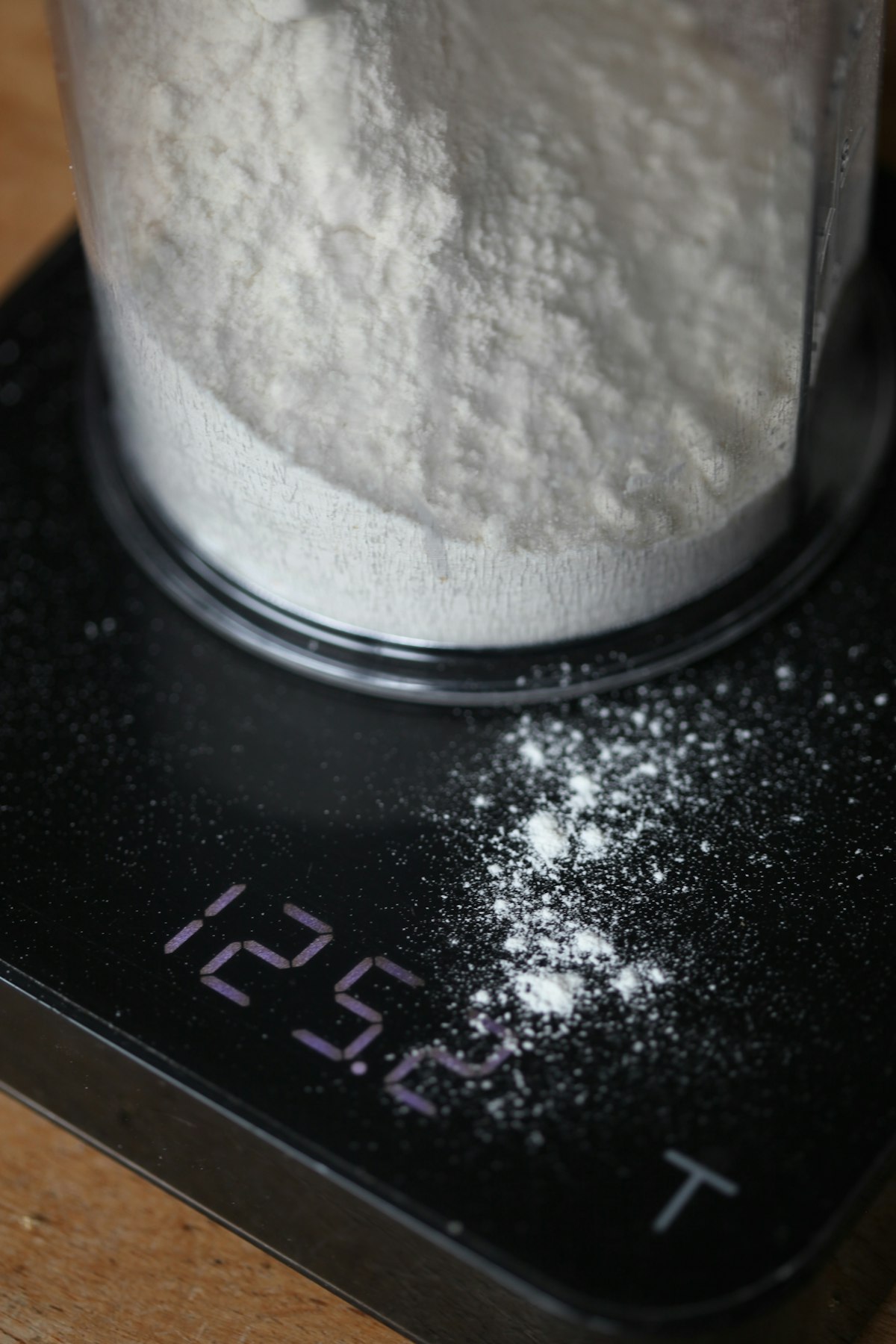
Most baking failures traced to "the recipe must be wrong" are actually unit failures. A cup of flour can weigh 120 g or 180 g depending on how you scoop, which is a 50% difference in the ingredient that determines crumb structure. This guide covers the conversions that genuinely change outcomes, and the ones you can safely eyeball.
The cup problem: three cups, three sizes
- US legal cup: 240 ml (nutrition labels), while US recipes traditionally use 236.6 ml (8 fl oz). In practice interchangeable.
- Metric cup: 250 ml, used in Australia, New Zealand, and Canada.
- UK cup: 284 ml when it appears at all; Britain mostly weighs ingredients instead.
A 14 ml difference per cup is nothing in soup and everything in macarons. When a recipe is precision-sensitive, the author's country tells you which cup they meant.
Weight beats volume, always
Professional bakers weigh everything. You should too, for the ingredients where scoop technique matters:
| Ingredient | 1 US cup weighs | Why it varies |
|---|---|---|
| All-purpose flour, spooned | 120 g | scooping packs it: +30-60% |
| Bread flour | 127 g | higher protein, denser |
| Granulated sugar | 200 g | crystal size (fine sugar packs) |
| Brown sugar, packed | 213 g | "packed" is part of the recipe |
| Butter | 227 g | solid: no air, exact |
| Water / milk | 240 g | 1 ml ≈ 1 g, always |
Use our grams to ounces converter for anything your scale reads in the other unit.
Butter: the international mess
US recipes speak in sticks and tablespoons, European ones in grams. The anchors:
- 1 US stick = 113 g = 8 tablespoons = 1/2 cup
- 1 tablespoon butter = 14 g
- European blocks: 250 g (about 2.2 sticks) or 200 g (France)
The tablespoon marks printed on European butter wrappers are the fast way to portion without a scale.
Oven temperatures
American recipes: 350 °F. European: 180 °C. They are the same setting. Common marks: 275 °F = 135 °C, 325 °F = 165 °C, 400 °F = 200 °C, 450 °F = 230 °C. If the recipe says "gas mark 4", that is British: 180 °C. Fan/convection ovens typically run 20 °C (25 °F) hotter than the dial suggests, so reduce the setting. Exact numbers any time with the temperature converter.
What you can safely eyeball
- Salt, pepper, herbs: a "pinch" is not a unit you need to convert
- Chopped vegetables in soups and stews: ±25% changes nothing
- Stock or water in braises: you can adjust as it reduces
Save your precision for flour, leaveners, and sugar in baking. There, weigh everything, convert nothing by volume, and your bakes stop depending on humidity and scoop technique.
The five conversions to memorize
- 1 cup flour ≈ 120 g (spooned and leveled)
- 1 stick butter = 113 g = 8 tbsp
- 1 tbsp = 3 tsp = 15 ml (US); a UK imperial tbsp is 17.7 ml, Australian 20 ml
- 1 oz = 28.35 g; 1 lb = 454 g
- 350 °F = 175-180 °C
Everything else lives one tap away in our volume converter and weight converter.