
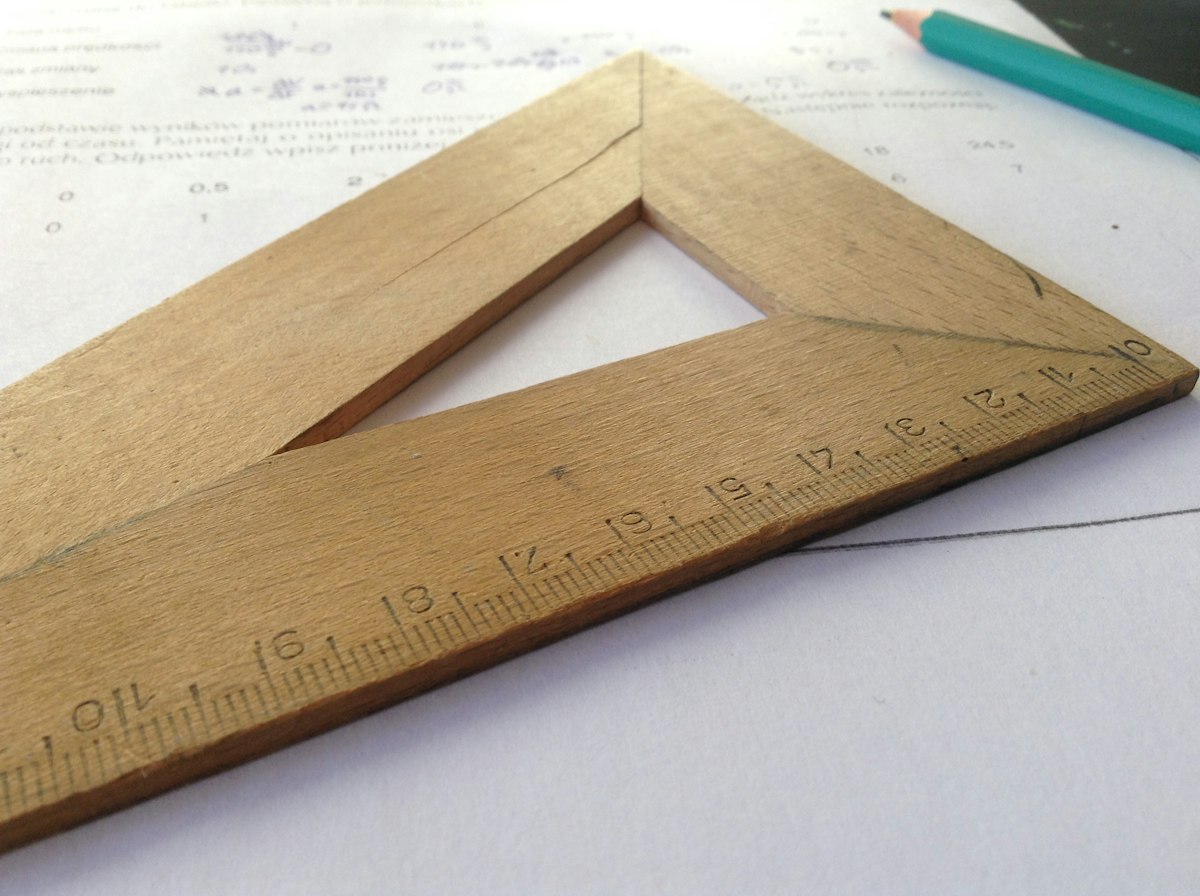
Every field measures the same circle differently: pilots talk degrees, programmers feed radians into APIs, European surveyors use gradians, and dancers talk turns. The angle is identical; only the yardstick moves. Here is when each appears and how to move between them without a calculator.
The four systems
| System | Full circle | Where you meet it |
|---|---|---|
| Degrees (°) | 360 | Navigation, weather compasses, design tools, everyday talk |
| Radians (rad) | 2π ≈ 6.283 | All programming, physics, engineering math |
| Gradians (gon, grad) | 400 | European surveying, some construction calculators |
| Turns / arc systems | 1 | Animation easing, vinyl records, clock arithmetic |
Why programming insists on radians
A radian is the angle where the arc length equals the radius. That makes radians "natural": arc length = r × θ, and calculus of trig functions is clean (derivative of sin(x) is cos(x) only in radians). Every graphics API, game engine, and math library takes radians, while every human-facing UI shows degrees. The translation layer is where bugs live: CSS rotate() uses degrees, SVG arcs use degrees, but JavaScript Math.trig() uses radians. forgetting the × π/180 is the most common graphics bug in existence.
Quick values: 30° = π/6, 45° = π/4, 60° = π/3, 90° = π/2, 180° = π, 360° = 2π. If your rotation animates through "1.57" and stops, someone passed radians where degrees were expected: it rotated a quarter turn instead of 90°.
Gradians: the French revolution's circle
France metricated the circle too: 400 gon per circle, so 100 gon = 90°, a right angle. The benefit for surveyors: a right angle is a clean 100, slopes read directly (a 45° roof pitch is a 100% grade = 50 gon). Beyond surveying documents and some calculators, gradians have retreated, but construction calculators still default to them in some countries, and "GON" on a theodolite display confuses exactly one person per project. Convert any of it with the degrees ↔ gradians tool.
Practical anchors
- 1° = 60 arcminutes = 3,600 arcseconds. The Moon and Sun are both about 0.5° (30 arcmin) wide
- Hand at arm's length: pinky ≈ 1°, fist ≈ 10°, thumb-to-pinky spread ≈ 15-17°
- Compass: 360° bearings; aviation separates with degrees magnetic vs true (magnetic variation is printed on every chart)
- Slope: 45° = 100% grade; 30° ≈ 58%; wheelchair ramps max 4.8° (8.3%)
- Roof pitches: 30° ≈ 7/12 pitch, 45° = 12/12
Converting, the exact way
- deg → rad: × π/180. rad → deg: × 180/π
- deg → gon: × 10/9. gon → deg: × 9/10
- arcmin: ° × 60; arcsec: ° × 3,600
Convert right now